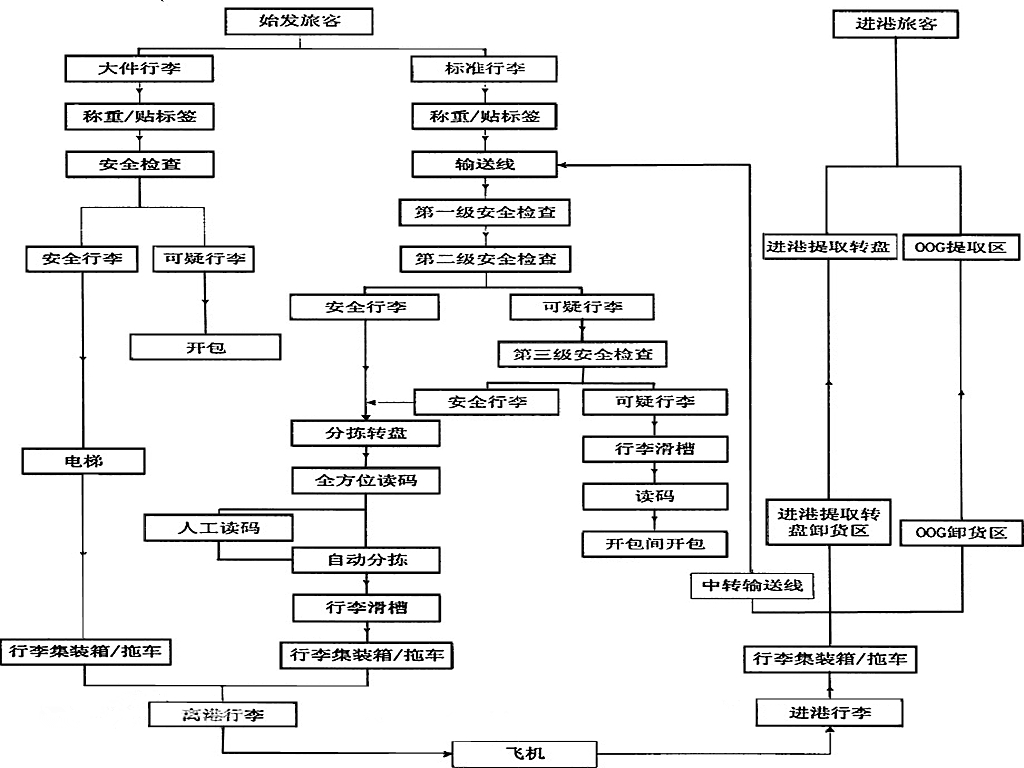
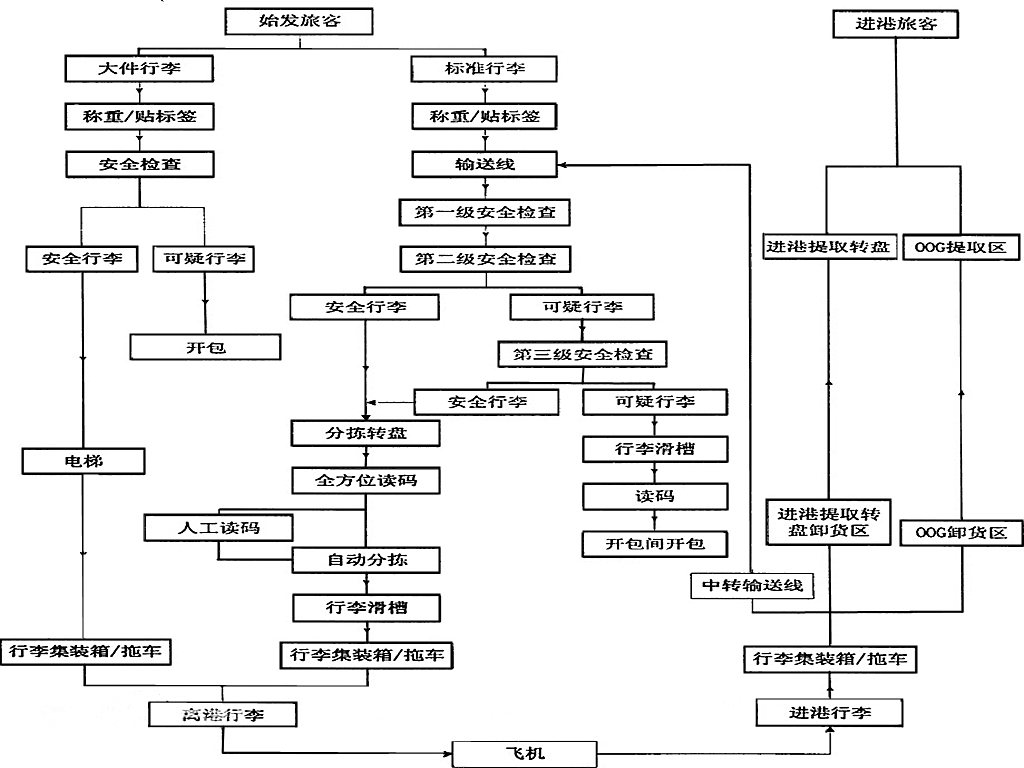
Departure baggage handling process(1-9)

"Airport Baggage Automatic Handling System and Its Handling Methods" applies to the complex electromechanical integrated control system for automatically handling airport departure, arrival, early arrival, and transfer baggage. The airport baggage automatic handling system adopts a fully automatic mode, supports centralized security inspection of baggage, and organically integrates the collected baggage data with logistics and information flow, thereby improving work efficiency. It serves as the foundation of airport information management. In terms of handling methods, the check-in section employs an equal probability injection method to ensure that baggage enters the collection belt with equal probability. For baggage tracking, the grid method and BIT-stream-based baggage tracking and positioning technology are used to ensure precise tracking of baggage.

Behind-the-scenes process of airport baggage handling

Before departure, passengers first inspect their luggage and expect it to arrive at their destination on time. Passengers are unaware of the entire process of their luggage from check-in to baggage claim. During this process, the safety, flawless handling, and speed of luggage are of utmost importance. Ensuring the safe arrival of passengers' luggage at their destination is crucial. The baggage handling system plays a pivotal role, transporting luggage from the check-in facility to the aircraft. There, it is weighed, tagged, or encoded. The encoding allows the baggage handling system to identify the location of the luggage and ensure its safe delivery to the correct aircraft. We will show you which baggage conveyor equipment is most suitable for each step of the process.

1、check-in conveyor

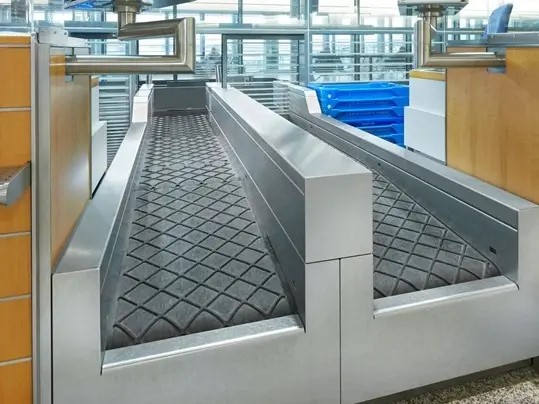
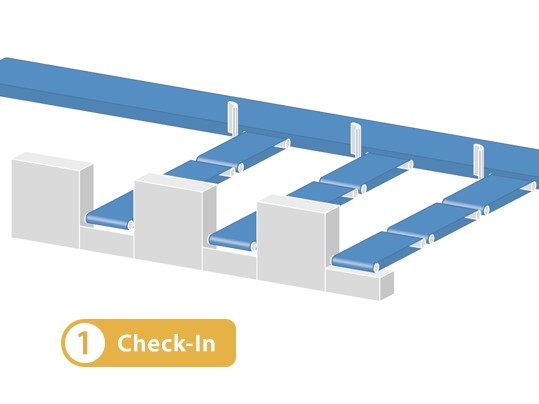
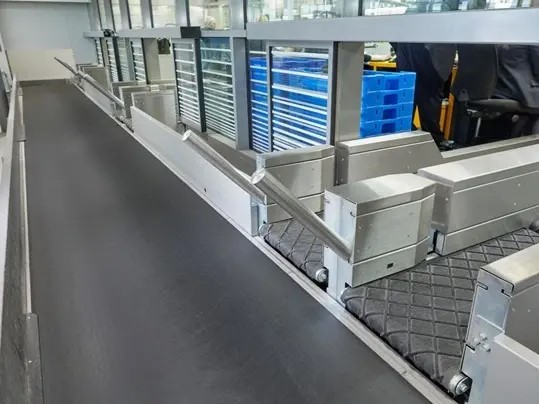
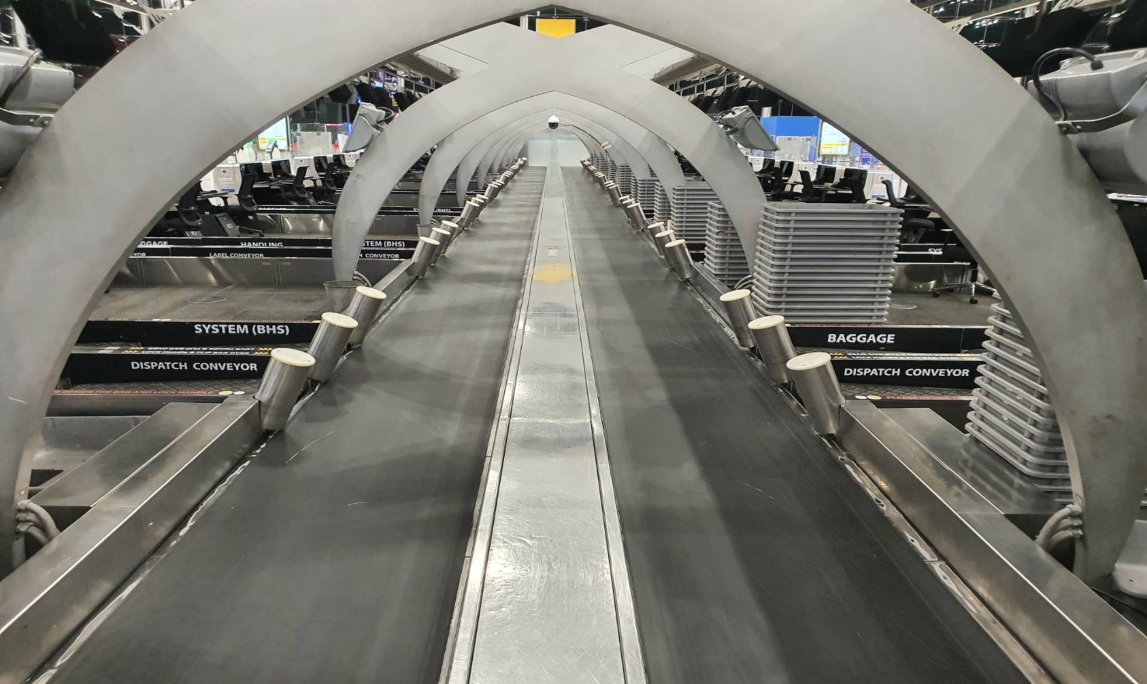
When passengers check in, they place their luggage on the weighing conveyor for weighing. The luggage weight is automatically displayed on the counter's monitor. Excess baggage automatically triggers an alarm, while qualified luggage is labeled and encoded. The operation proceeds to the waiting conveyor (or security inspection conveyor) and then to the injection conveyor. Excess baggage automatically triggers an alarm, the conveyor stops running, and the luggage is evacuated before the weighing conveyor resumes operation. The luggage, after passing through security inspection and weighing, is transferred to the waiting conveyor. Depending on the operation status of the collection conveyor, if it is blocked, the luggage automatically stops on the waiting conveyor and waits for a signal. If it is operating normally, the waiting conveyor automatically starts and sends the luggage to the actual luggage handling system. The working principle adopts a full-line linkage mode.

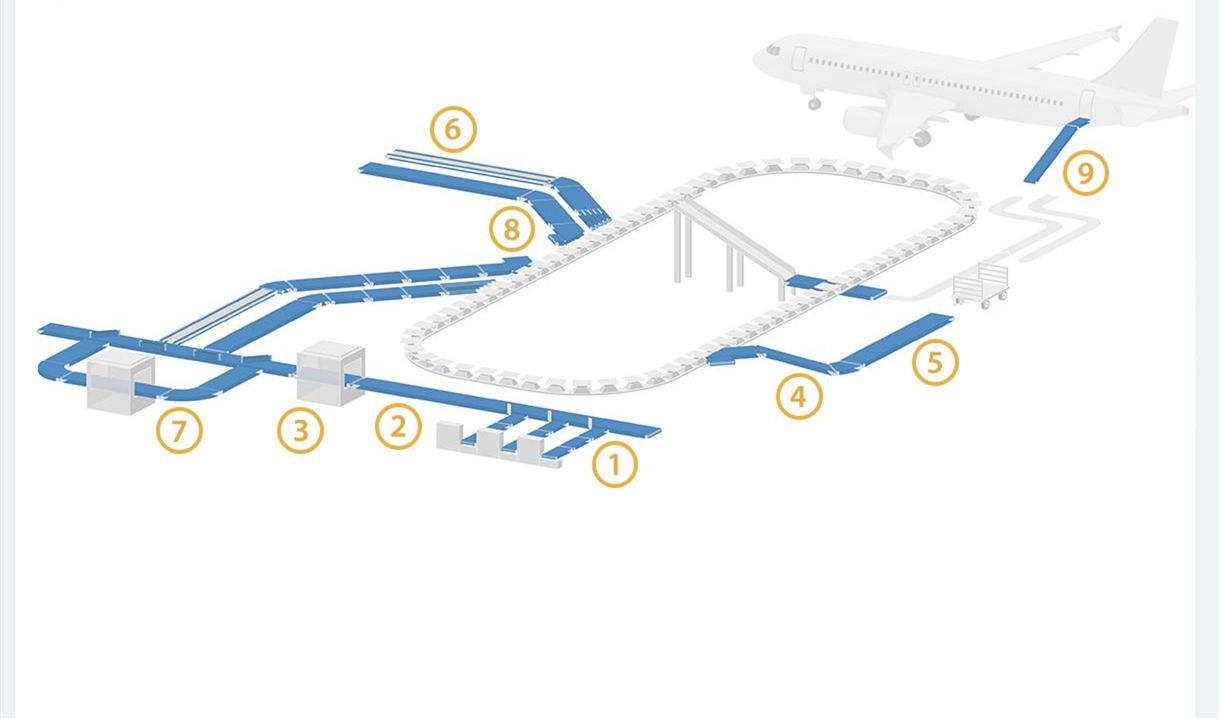
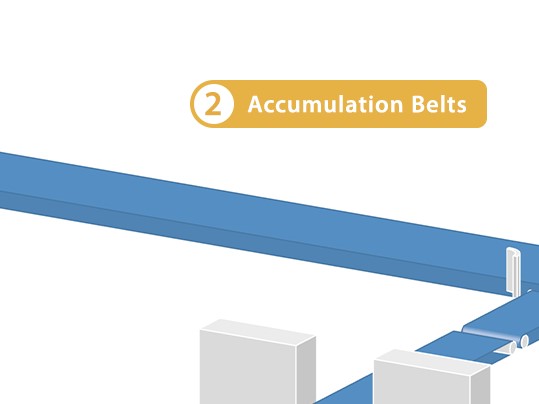
2、collecting conveyor

The check-in system comprises weighing conveyors, transition conveyors, and injection conveyors. The components installed on the equipment feature an automatic shutdown inspection function. Each belt of the waiting conveyor can only transport one piece of luggage at a time. Equipment such as weighing conveyors, waiting conveyors, injection conveyors, and straight conveyor lines for collection have a linkage system, which effectively addresses the safety inspection and conveyance of passenger luggage, greatly enhancing the passenger capacity of airports and widely used in modern airports.

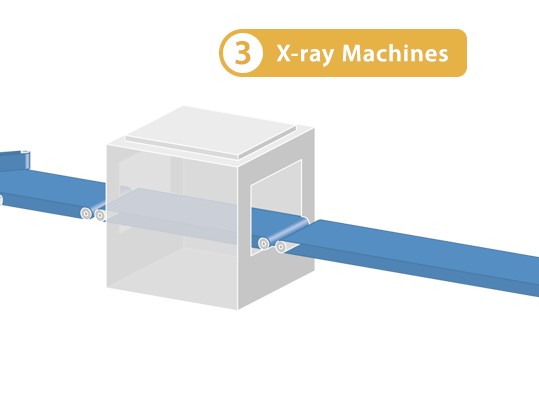
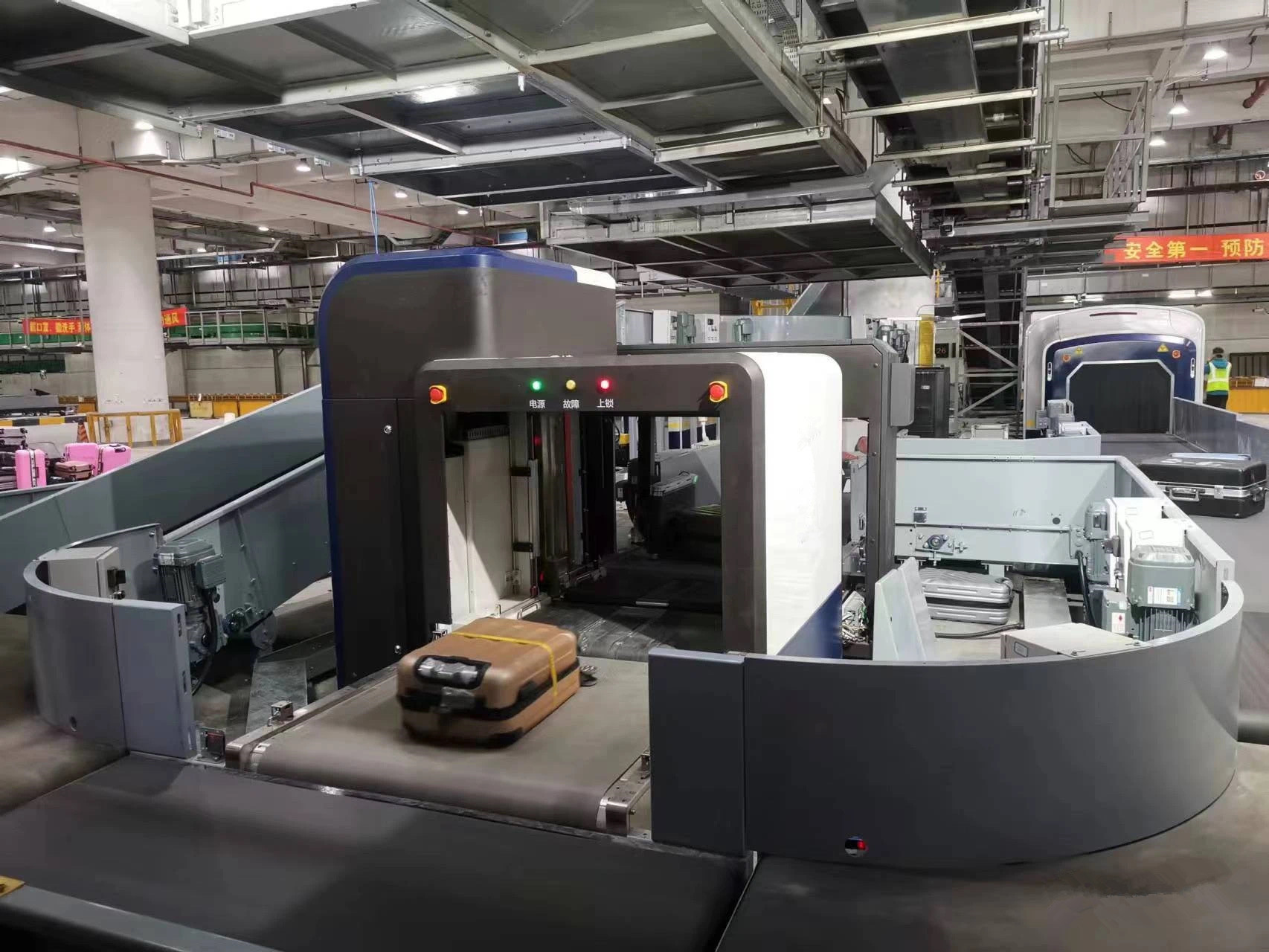
3、X-ray security inspection equipment

Safety is of utmost importance to airports. Therefore, all luggage must be inspected through X-ray equipment to ensure that there is nothing that could endanger flight safety. Over the years, this measure has also been applied to carry-on and checked luggage. During luggage inspection, it is very important that the conveyor belt does not cast any shadows. To prevent anything from being out of focus on the X-ray image, the safety belt must be absolutely flat and pass through the X-ray equipment in a straight line at the same speed.

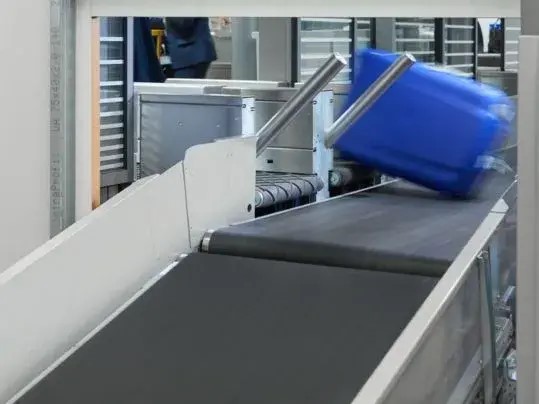
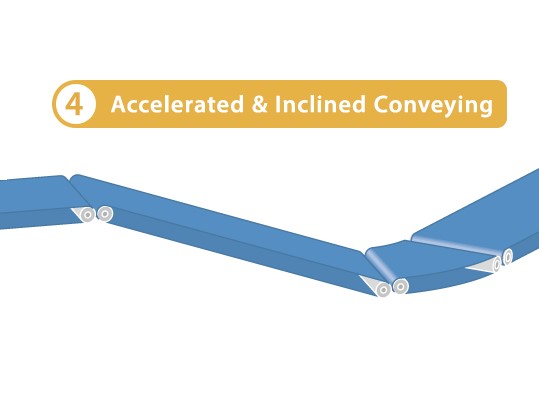
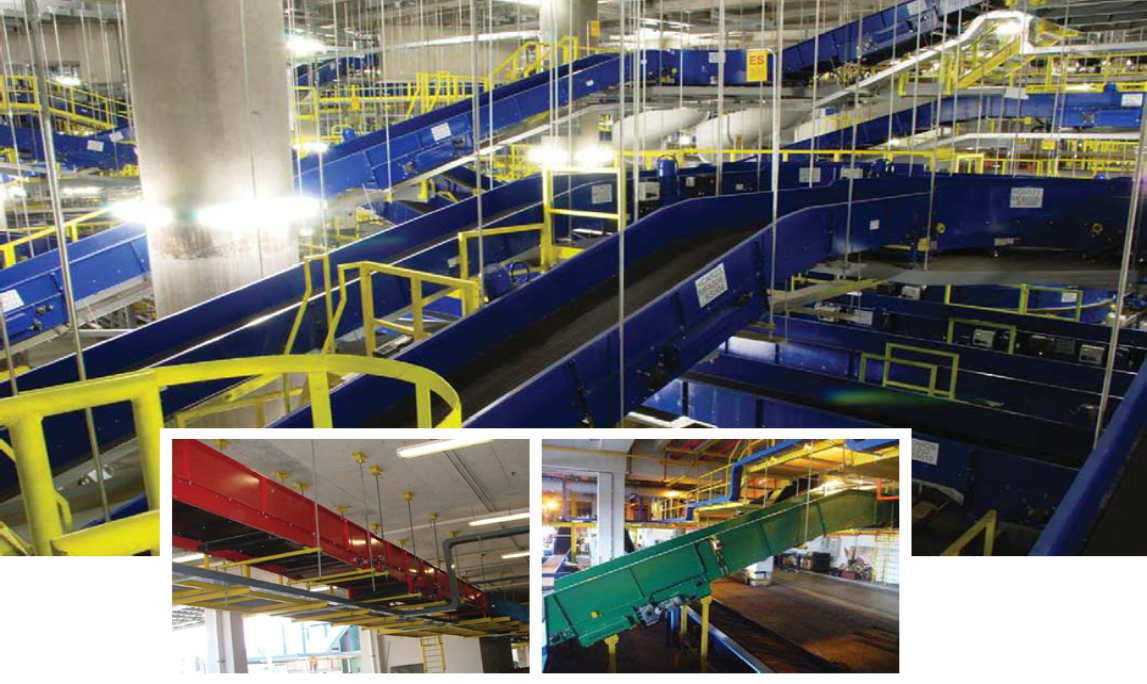
4、Accelerated inclined conveyor line

During the acceleration and tilting transportation process, luggage items must remain in their original positions. If their locations cannot be accurately tracked at any time, this process will be severely disrupted.

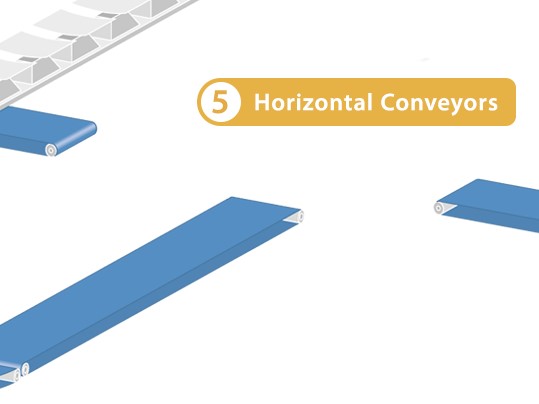
5、Horizontal conveyor

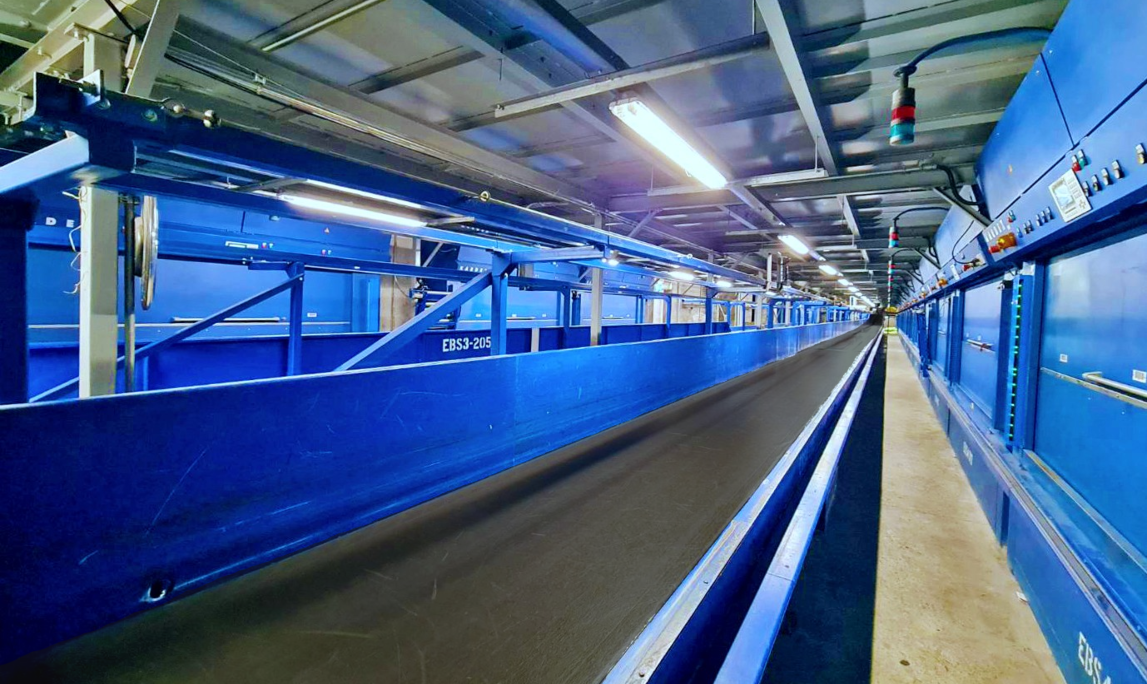
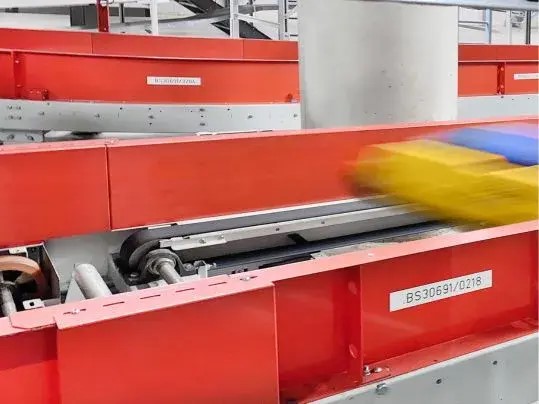
Baggage items are typically transported horizontally over long distances, from check-in to the sorting area, and then from there to the aircraft. To cover these distances, conveyors account for a significant proportion of total energy consumption. This is why energy-saving belts on horizontal conveyors can generate a very fast return on investment. These belts also need to be durable, low-noise, and flame-resistant.

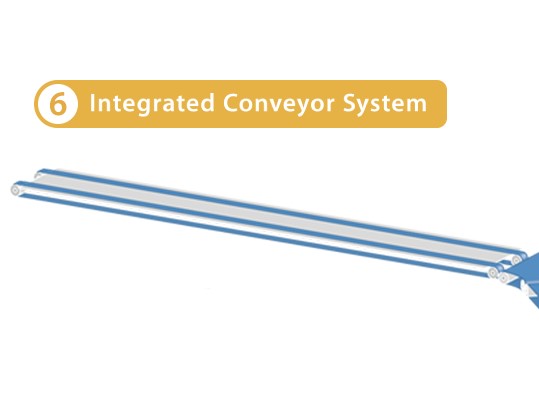
6、Integrated conveyor system

Luggage items are transported on trays, especially on high-speed road sections. These devices ensure luggage safety, reduce damage, and enable better tracking within the luggage handling system. The trays are positioned externally, on two narrow parallel conveyor belts or timing belts. The speed of these luggage tray systems can reach up to 12 meters per second. The rapid conveying speed requires a durable and stable-running chassis. At the same time, the coating material and pattern of the top surface must ensure that empty and heavy luggage boxes do not slip. Due to the long length and large load capacity of the conveyor belts, the narrow belts are subjected to significant tensile stress.

8、Merger and diverter

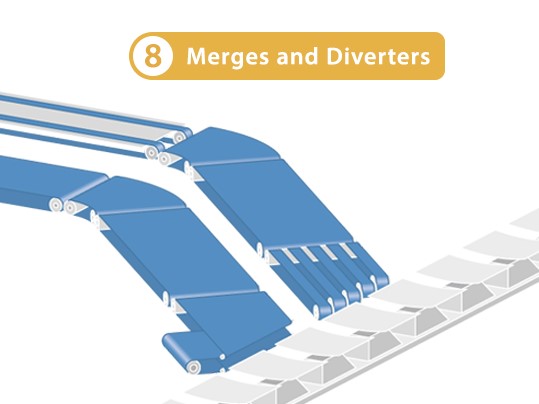
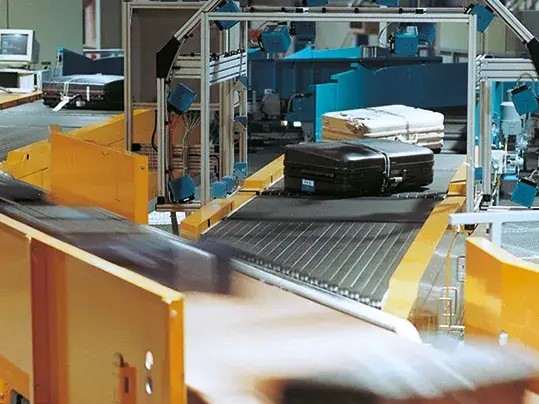
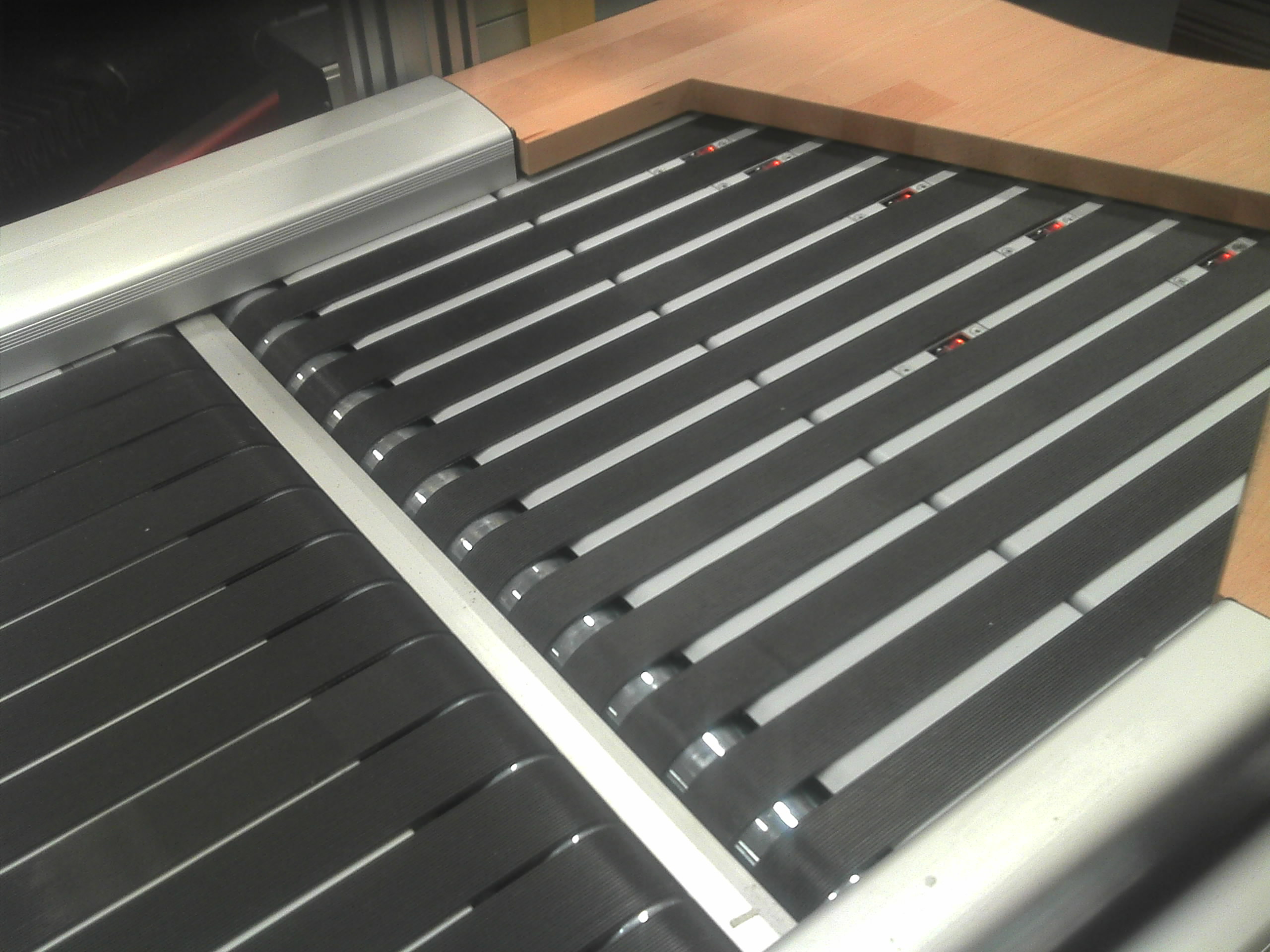
The sorting machine is the core of the baggage handling system. All checked-in baggage is consolidated here and (depending on its destination) redirected at a designated location. Consolidation usually occurs at an angle of 30° or 45° to the conveying direction of the sorting machine. These conveyors either have a single wide conveyor belt (full belt merge) or several narrow conveyor belts running side by side (belt merge). In the case of belt consolidation, a set of parallel running belts are stretched with only one tension roller. To achieve standard tension, strict length tolerances must be observed. All consolidation belts must meet the same technical requirements as curved belts.

9、load the aircraft

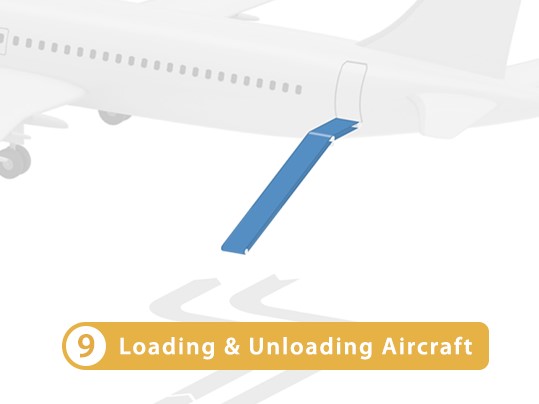
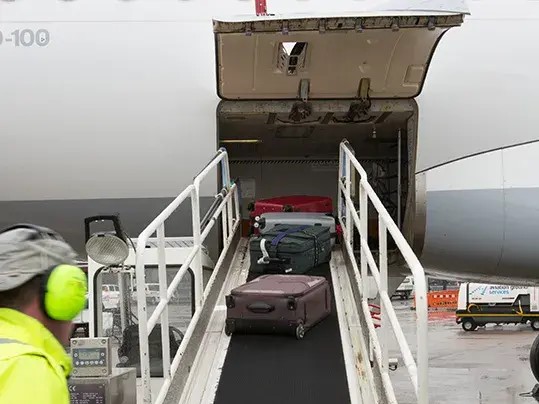
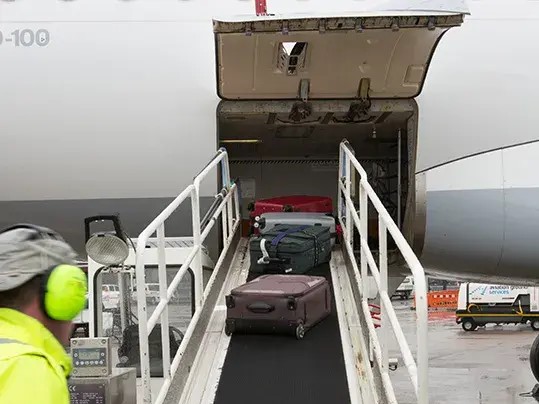
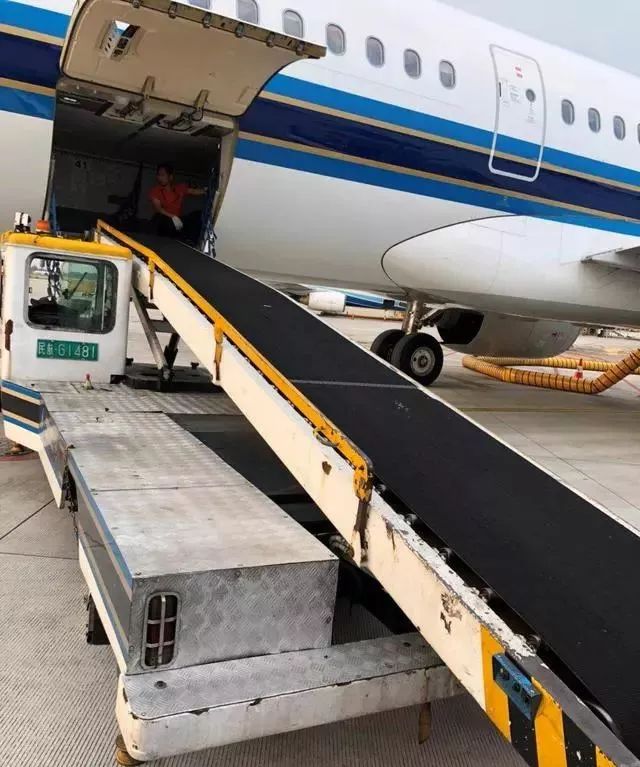
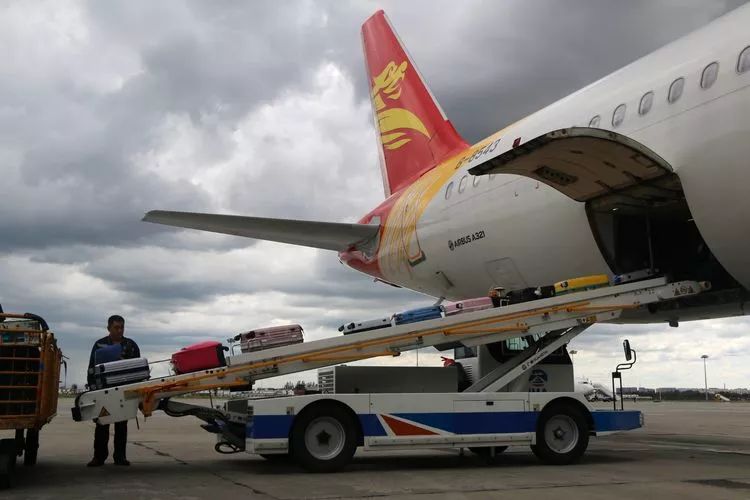
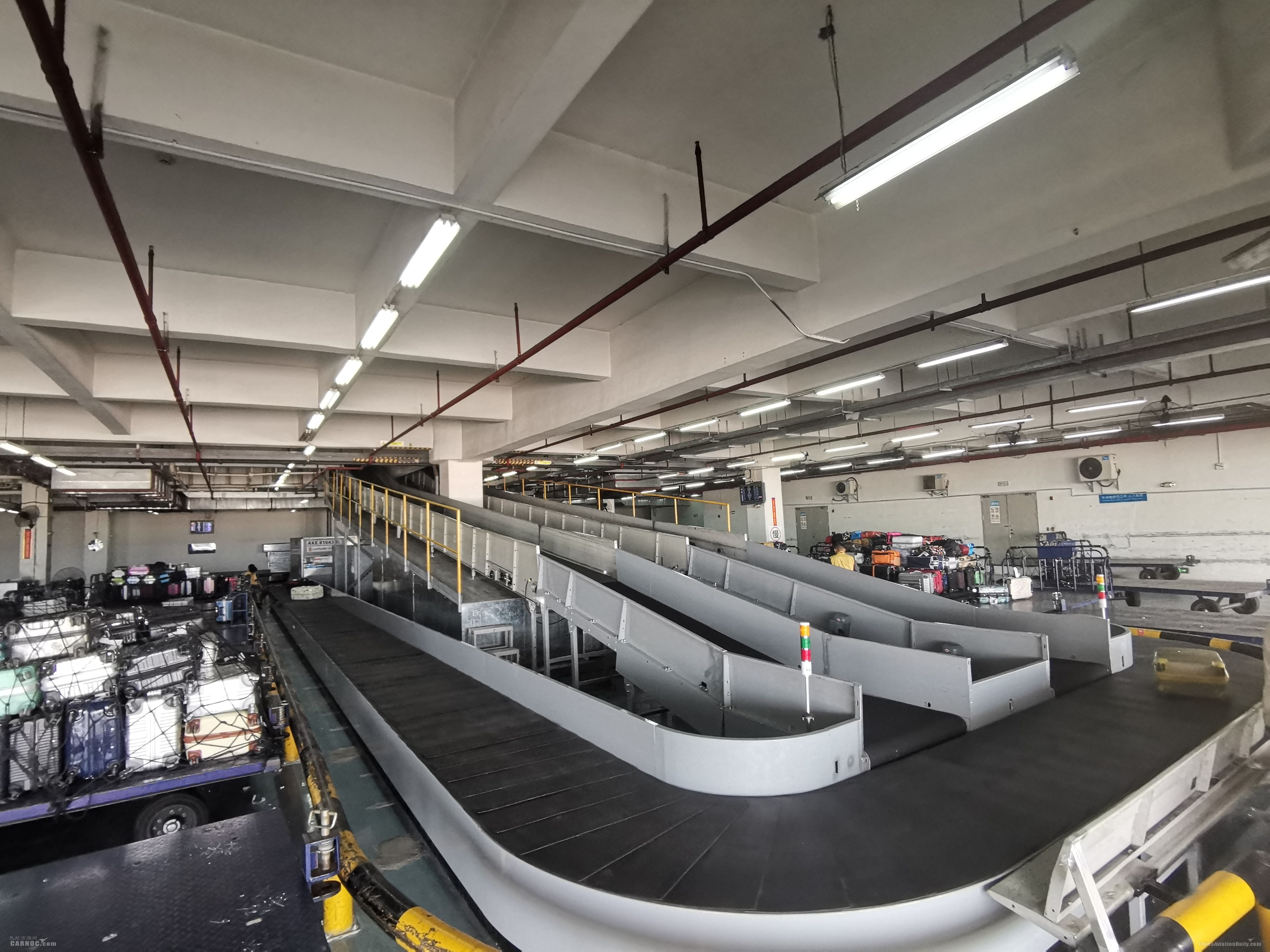
Airplanes are typically loaded and unloaded by outdoor tilt conveyors, and luggage is accurately placed in the cargo hold of the plane with the assistance of specialized vehicles and ground crews.

Inbound baggage handling process (10-12)

Inbound baggage handling process: Inbound baggage is primarily sorted and collected through baggage carousels. The baggage operation process involves a check-in conveyor that transports baggage directly from the check-in counter to the loading carousel, which also features a weighing function. A baggage scanning system is used for rapid identification and sorting of baggage, enhancing processing efficiency. This series of processes ensures that baggage is efficiently and accurately handled and sorted throughout the entire process from departure to arrival, thereby improving the efficiency of the entire logistics system

10、unload the aircraft

After the aircraft arrives at its destination, the luggage on board is unloaded via conveyor belts with the assistance of professional vehicles and ground personnel.

11、Luggage container/trailer

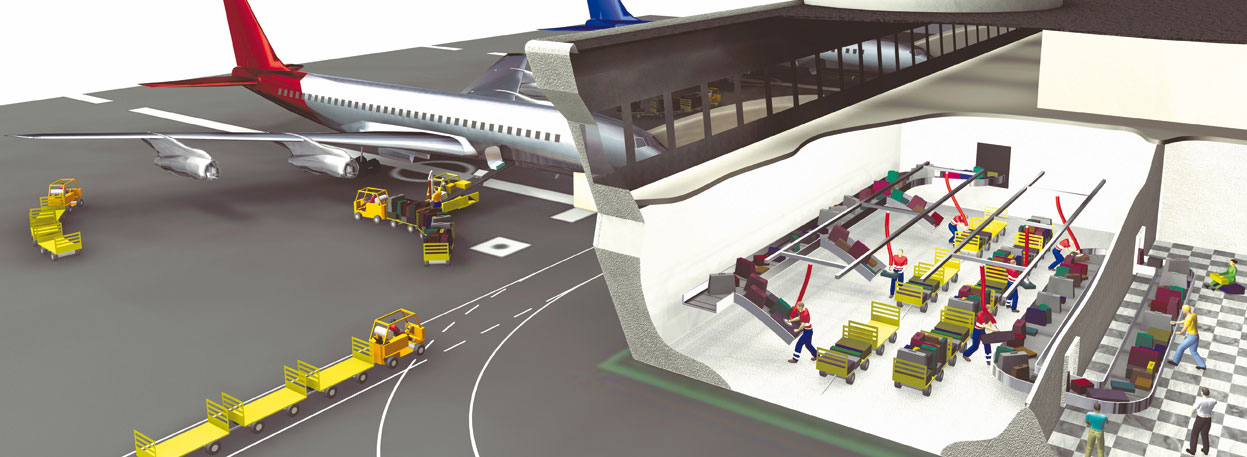
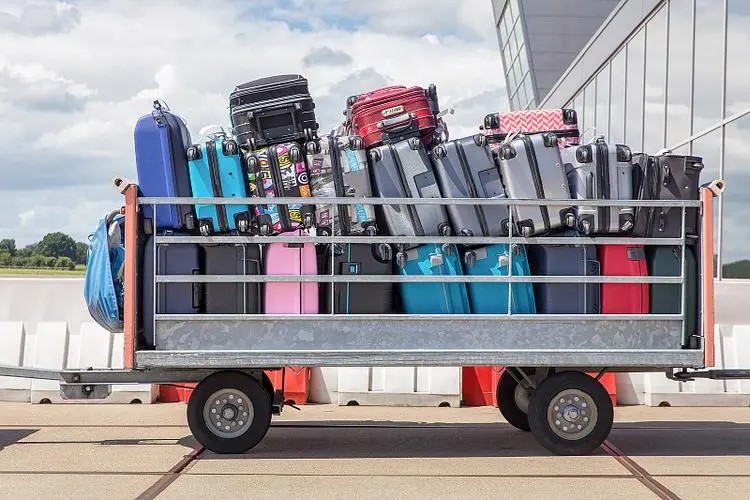
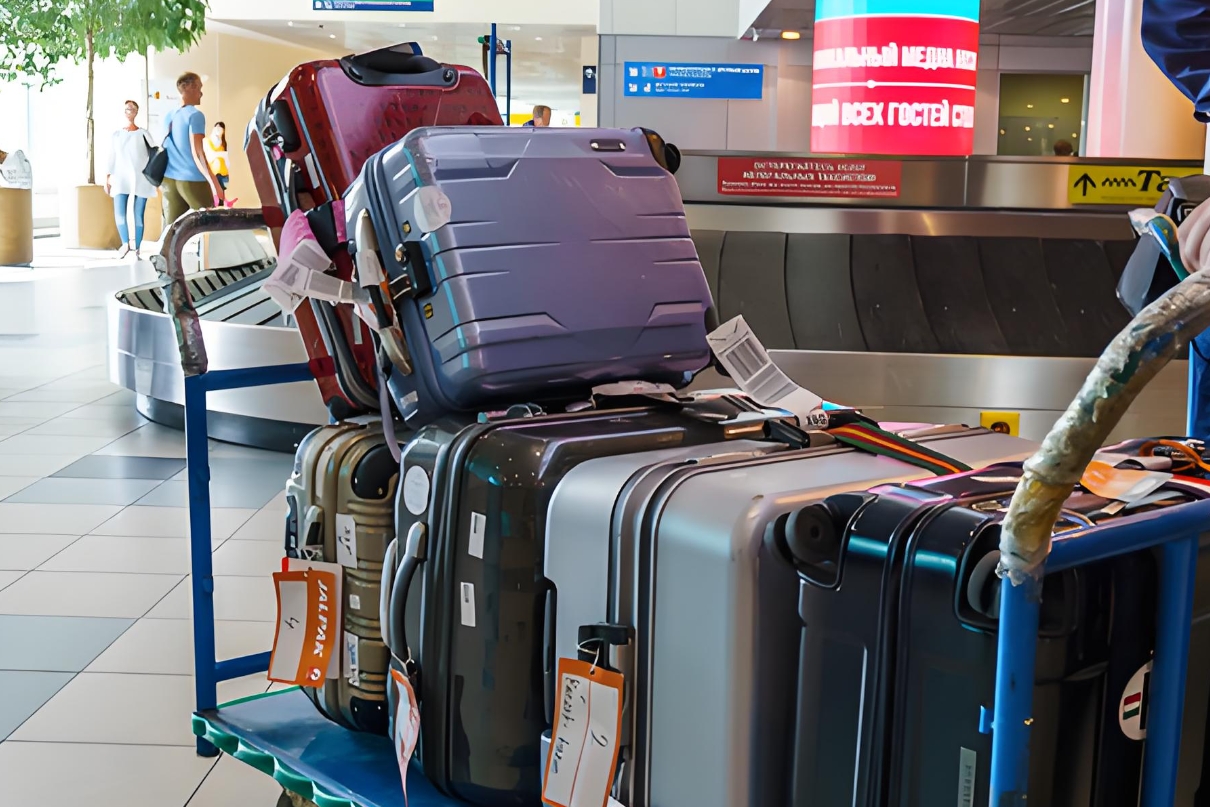
The luggage unloaded from the aircraft is transported to the port arrival luggage unloading area via luggage containers or trailers, with the assistance of professional vehicles and ground personnel. It is then conveyed to the luggage carousel through the luggage conveyor system.

12、Transfer conveyor line/baggage carousel/OOG unloading area

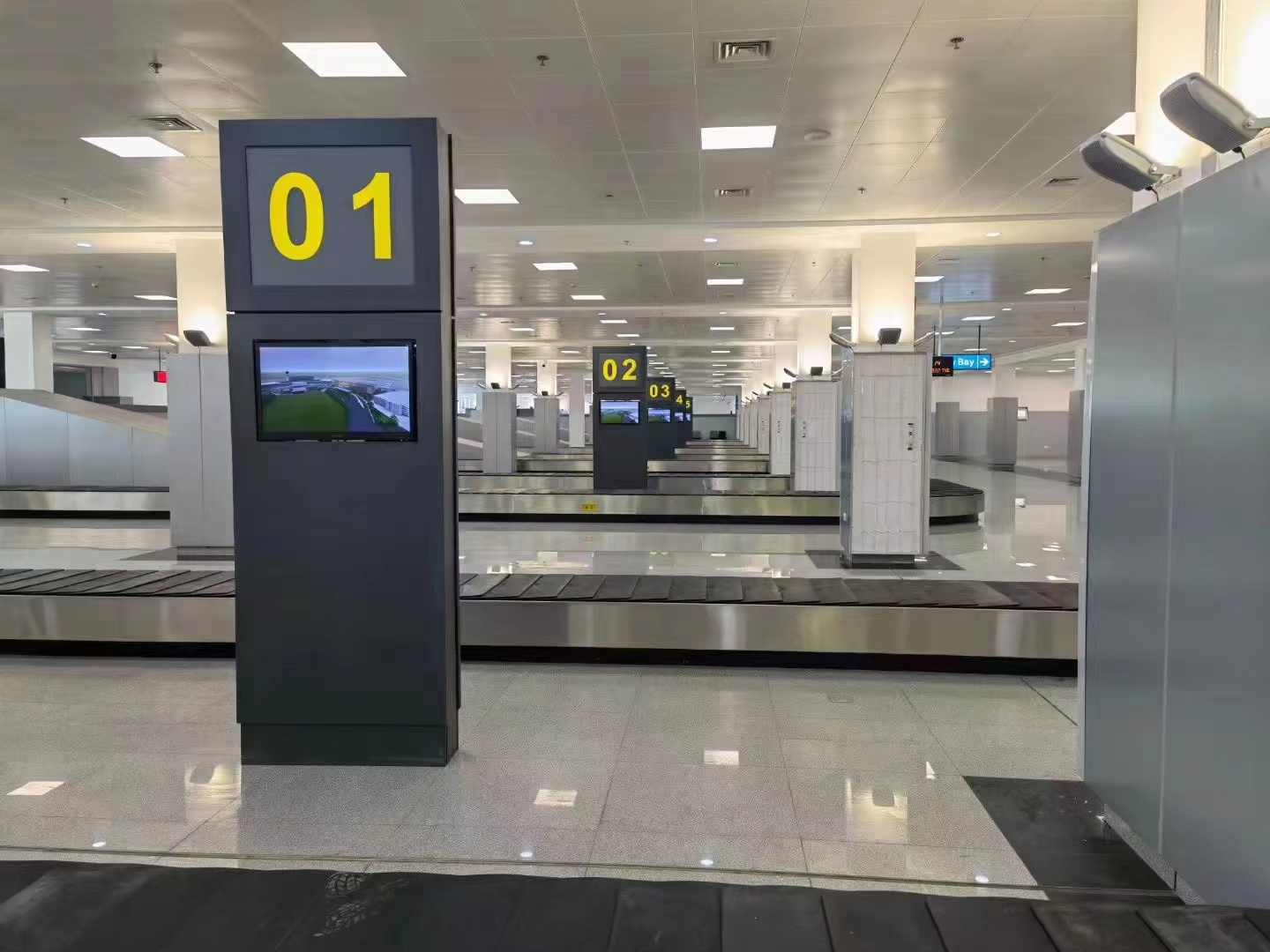
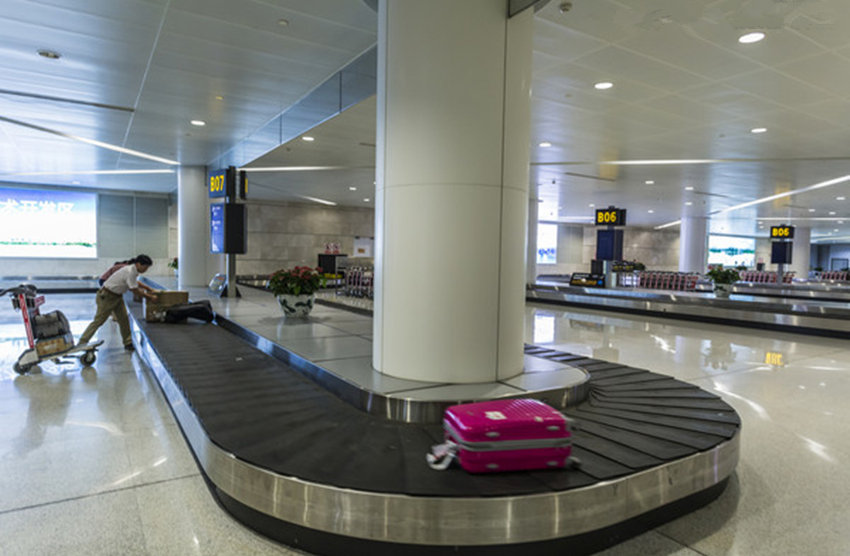
After arriving at the destination airport, passengers proceed to the baggage claim hall and collect their luggage from the designated carousel. Passengers can identify the carousel corresponding to their flight and locate their luggage items on it. This series of processes ensures that checked baggage can safely and accurately follow passengers to their destinations. The airport's baggage handling system, including baggage carousels, sorting systems, etc., is designed to efficiently and accurately handle a large volume of baggage, ensuring that it can be quickly and accurately delivered to passengers.